Published

Medically reviewed by Danesh Alam MD, DFAPA, DFASAM

Holiday visits are often when adult children first notice that something has changed with a parent. The wine at dinner starts earlier. There is a bruise no one explains, a story repeated twice in an hour, a refrigerator with more bottles than food. It is easy to tell yourself it is just aging, or just the holidays.
Sometimes it is. But alcohol problems among older adults are increasing, and they are easy to miss, so it is worth looking clearly. This article explains why alcohol affects older bodies differently, what signs federal health agencies say to watch for, why stopping suddenly can be dangerous, and how to raise the subject without turning Thanksgiving into a confrontation.
If someone is confused and cannot be roused, has a seizure, or is seeing or hearing things that are not there after cutting back on heavy drinking, call 911.
Why alcohol affects older adults differently
The National Institute on Alcohol Abuse and Alcoholism (NIAAA) reports that alcohol misuse and alcohol-related harms are increasing among older adults, and at a faster rate for women than for men. NIAAA: Aging and Alcohol
The reasons are partly physical. According to NIAAA:
- Older people are more sensitive to alcohol's sedative effects and to its effects on balance, coordination, attention, and driving, which raises the risk of falls, car crashes, and other injuries.
- Reduced muscle mass and body water mean some older adults reach higher blood alcohol concentrations than younger people after drinking the same amount.
- As a result, older adults can develop alcohol-related problems at lower drinking amounts than younger people.
That last point matters at the holiday table. A parent may be drinking exactly what they drank for decades and still be drinking too much for the body they have now. NIAAA notes that some people who drank a certain amount for years without obvious problems now find that the effects come on more quickly and feel more pronounced.
Signs families notice
NIAAA lists these possible clues to an alcohol problem in older adults: memory loss, depression, anxiety, poor appetite, unexplained bruises, falls, sleeping problems, and inattention to cleanliness or appearance. NIAAA: Aging and Alcohol
Every one of those signs can also come from something else: a new medication, depression, a thyroid problem, early dementia, grief. That overlap is exactly why alcohol gets missed. It is also why the right next step is a medical evaluation, not a family verdict. Our article on drug-induced dementia explains how alcohol and some medications can cause memory changes that may improve once the cause is addressed.
Clinically, alcohol use disorder (AUD) is diagnosed when a person has at least two of eleven symptoms in the past year. NIAAA's list includes drinking more or longer than intended, wanting to cut down but not being able to, continuing to drink despite problems with family or health, needing more alcohol for the same effect, and withdrawal symptoms such as trouble sleeping, shakiness, sweating, or a racing heart when alcohol wears off. AUD is described as mild, moderate, or severe depending on how many symptoms are present. NIAAA: Treatment for Alcohol Problems
Families sometimes see the clearest picture in what a parent says, not what they drink: "It's the only thing that helps me sleep," or "What else am I supposed to do all day?" NIAAA describes how retirement, the death of a loved one, or health problems can prompt older adults to drink to cope with loneliness, boredom, anxiety, or depression, and how drinking to sleep can actually make sleep worse.
Alcohol and medications: a particular risk with age
Many older adults take several prescriptions. NIAAA warns that alcohol can make medications less effective or make them dangerous, and gives examples:
- Alcohol with aspirin raises the risk of stomach or intestinal bleeding.
- Acetaminophen may cause liver damage, particularly in people who drink chronically.
- Mixing alcohol with any sedating drug, including sleep medications, anxiety medications, cold and allergy medications, and opioid pain medications, can be deadly.
- Alcohol can change the blood levels and effectiveness of some blood pressure medications and antibiotics.
NIAAA: Aging and Alcohol; see also NIAAA's guide to harmful interactions between alcohol and medicines.
Local data point the same way. In the Florida Department of Health in Palm Beach County's 2024 report on non-fatal overdoses, overmedication or adverse reactions accounted for 10.2% of analyzed cases, and 74.2% of those overmedication-related overdoses occurred in adults 55 and older. The report also found that 19% of overdoses among women in its sample involved women 65 or older. Florida DOH–Palm Beach County, 2024 OD2A non-fatal overdose report
Falls deserve their own mention. The Palm Beach County Medical Examiner's Office recorded 593 deaths caused by falls in 2025 and reported that the vast majority occur in unstable elders who fall from a standing position. Palm Beach County Medical Examiner, Annual Report 2025 That report does not say how many of those falls involved alcohol, and this article will not guess. NIAAA's point is simply that alcohol makes falls more likely, and a fall at 78 is a different event than a fall at 38.
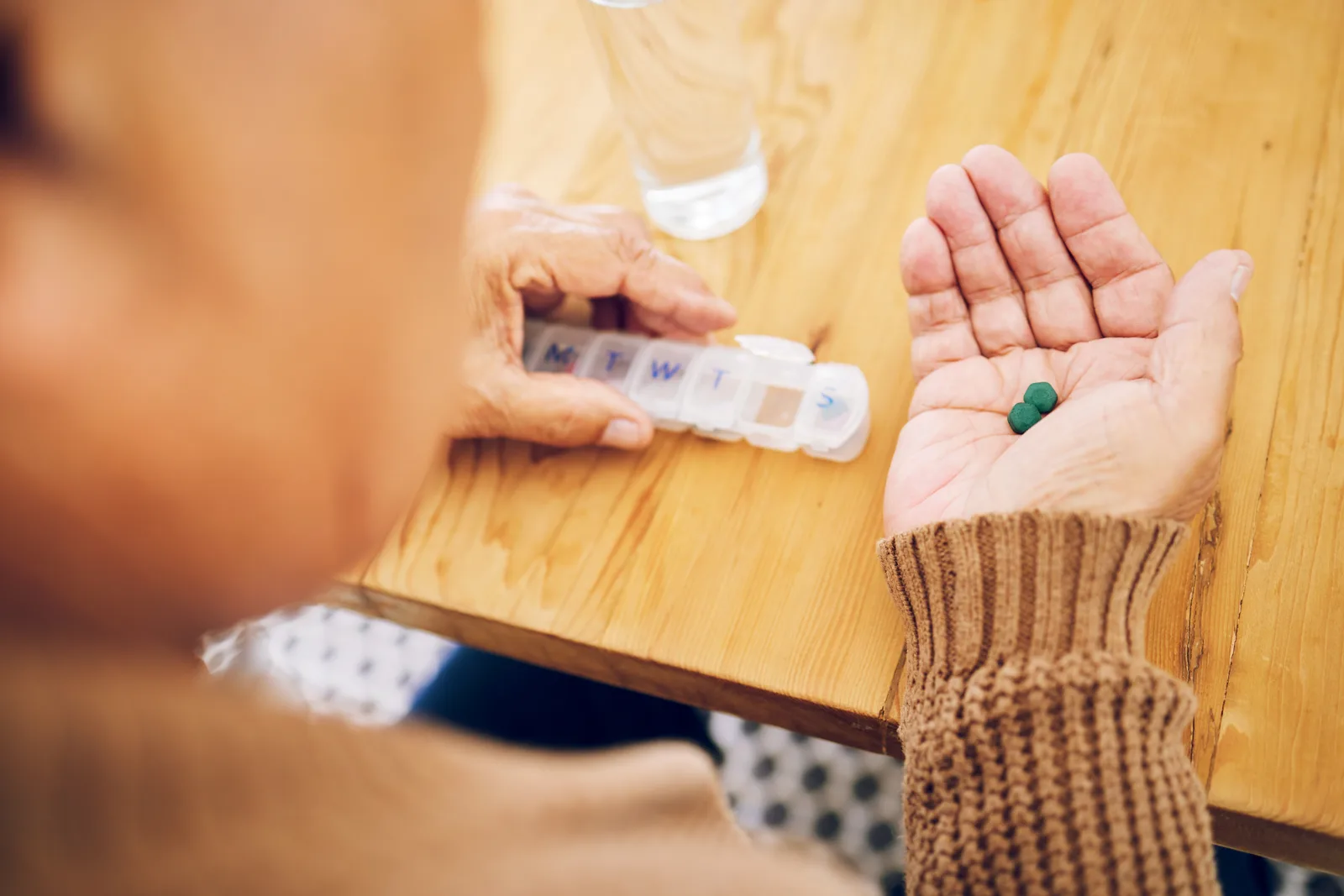
Photo for illustrative purposes. Posed by model. Photo: PeopleImages / Shutterstock.
Why it often goes unrecognized
The Substance Abuse and Mental Health Services Administration (SAMHSA) puts it bluntly in its treatment protocol for older adults: substance misuse in older adults is often overlooked and undertreated, partly because of false beliefs that older adults do not develop or need treatment for alcohol and drug use disorders. Older adults are less likely than younger adults to be correctly diagnosed and offered treatment. SAMHSA also says the idea that older adults are not interested in or do not respond well to treatment "is simply untrue," and that treatment adapted to their physical, cognitive, and social needs is likely to be effective. SAMHSA: TIP 26, Treating Substance Use Disorder in Older Adults
Research outside the United States shows the same gap. A 2025 study of adults aged 55 to 80 in Denmark found that even among people whose answers suggested possible alcohol withdrawal, fewer than 5% had received AUD treatment in the past year. Behrendt et al., Drug and Alcohol Review, 2025 The authors noted that contact with other health care providers was associated with getting treatment, which is one more reason to bring the family doctor into the conversation.
Why a parent should not just stop drinking cold turkey
If a parent drinks heavily every day, the worst well-meaning advice is "just stop." NIAAA warns that alcohol withdrawal can be life-threatening when people who chronically drink heavily stop suddenly, and that benzodiazepines given under medical supervision are the standard treatment for acute withdrawal. NIAAA: Alcohol Use Disorder: From Risk to Diagnosis to Recovery
The same caution applies if a parent also takes a prescribed benzodiazepine for anxiety or sleep. The FDA warns that stopping a benzodiazepine abruptly or cutting the dose too quickly can cause serious withdrawal reactions, including seizures. FDA: Boxed warning for benzodiazepines
Our article on alcohol withdrawal and medical detox explains the timeline and warning signs. For an older adult with heart disease, diabetes, a history of falls, or several medications, the case for medically supervised withdrawal is even stronger.
How to raise it over the holidays
The National Institute on Aging (NIA) offers practical steps for families. NIA: How to help someone you know who drinks too much
- Talk when your parent is sober, and not at the table in front of everyone. Thanksgiving morning, a walk, or a phone call later in the week is better than the moment after the third glass.
- Use "I" statements and facts. "I'm worried about the falls" lands better than a list of accusations.
- Avoid labels like "alcoholic."
- Offer to go along to a doctor or counselor appointment.
- Involve other family members so one person is not carrying it alone, and look after yourself. Al-Anon is one support option for families.
Expect that the first conversation may not go well. That is common and does not mean the effort failed. If your family is already in treatment together, our guide to your first family therapy session explains what that work looks like.
If a parent's drinking is tangled up with the loss of a spouse, our article on grief during the holidays may help. Grief and depression are reasons to treat both conditions together, not reasons to wait.
What treatment can look like
Treatment for an older adult usually starts with a medical assessment that looks at drinking, medications, memory, mood, and physical health together. From there, options include:
- Medical detox when withdrawal could be risky.
- Residential treatment, which provides 24-hour structure, when isolation, an unsafe home, repeated relapse, or co-occurring depression make outpatient care unlikely to work.
- Partial hospitalization (PHP), structured treatment during the day while sleeping at home, or intensive outpatient (IOP), several sessions a week that fit around daily life.
- Medication for AUD, such as naltrexone or acamprosate, chosen with attention to kidney and liver function and other prescriptions. Our guide to medications for alcohol use disorder explains how each works.
How a residential stay is approved and reviewed by insurers is covered in our guide to residential treatment and medical necessity. Coverage for older adults varies widely by plan type, so verify before making plans.
Frequently asked questions
Is it normal for older people to feel alcohol more strongly?
Yes. NIAAA explains that older adults are more sensitive to alcohol's effects and may reach higher blood alcohol levels from the same amount, so problems can develop at lower drinking levels.
Could memory problems be from alcohol rather than dementia?
They can be, and they can also be from medications, depression, or a neurological condition. A doctor should evaluate memory changes, and an honest account of drinking helps that evaluation.
Should my parent stop drinking right away?
Not abruptly, if they drink heavily every day. Alcohol withdrawal can be life-threatening. Talk with a doctor or a detox program first.
Is residential treatment appropriate for someone in their 60s or 70s?
It can be, when the assessment shows that daily structure, medical monitoring, or distance from an unsafe environment is needed. Age alone does not rule treatment in or out.
Getting help at Ambrosia
Ambrosia has been open since 2007. Call admissions at (888) 492-1633 to talk through medically supervised detox at Midwest Detox in West Palm Beach, adult residential treatment at Ambrosia Treatment Center on Singer Island, and step-down care afterward. Adults whose primary need is mental health can be evaluated at the Neuroscience Institute in West Palm Beach.
Admissions can verify insurance. Ambrosia is in network with most insurances. Logos do not mean every plan is in network. Coverage varies by plan, service, and location, and benefit information is an estimate, not a guarantee of payment. If a clinically needed stay is not fully covered, admissions can discuss private-pay options so that care is not cut short. You can also request a callback.