For police, fire, and EMS
First Responders Rehab
Addiction and mental health treatment for police officers, firefighters, and EMS personnel — from a team that understands the culture, the code, and the job.
About this program
First responders program
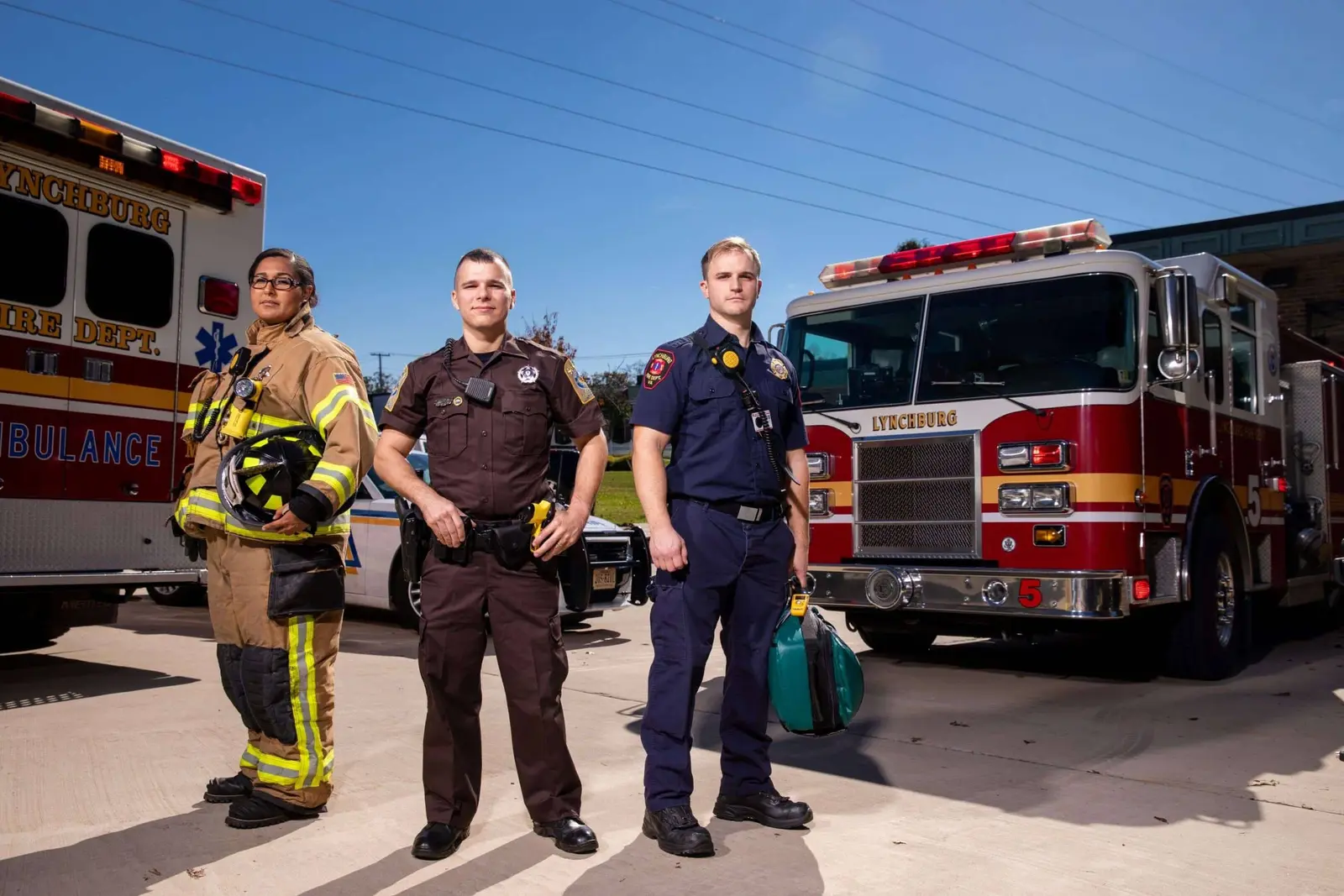
First responders arrive first at crises, disasters, and violent events — and they carry a disproportionate burden of trauma because of it. The Substance Abuse and Mental Health Services Administration reports that roughly one in three first responders develops a substance abuse or behavioral health condition such as PTSD as a result of the job.
One traumatic event is enough to cause PTSD symptoms; a daily inundation of danger and tragedy compounds the risk. Left untreated, these problems progress — guilt after a bad call becomes depression, depression gets self-medicated with binge drinking, and a problem that could have been treated in outpatient care now requires much more. Earlier help means easier treatment.
Ambrosia’s first responder program places patients in a peer community of people with similar backgrounds. When the others in the room truly understand the work, first responders open up sooner — and in our experience that expedites recovery.
The toll of the job
SAMHSA’s reporting on first responder mental health illustrates why this population needs specialized, high-quality care — and job-protected time away to receive it:
- 69% of EMS professionals have never had enough time to recover between traumatic events, per one study
- About half of male firefighters reported heavy or binge drinking in the past month
- Firefighters experience higher rates of suicide attempts and ideation than the general population
- Estimates suggest between 125 and 300 police officers die by suicide every year
Signs the job is taking a toll
PTSD is especially common in first responders because of the nature of the work. Symptoms to watch for include:
- Alcohol, drug, or food problems
- Flashbacks, nightmares, and recurring thoughts
- Loss of interest in things that used to bring pleasure
- Sleep problems
- Avoiding people, places, or things that recall the trauma
- High reactivity to certain situations
- Emotional numbness
Levels of care
Treatment follows the continuum of care defined by the American Society of Addiction Medicine, with personalized plans at every level and an alumni and aftercare program — support groups, meetings, and individual therapy — after discharge.
Outpatient services
Group and individual therapy while continuing to live at home and attend to work and family. Designated housing for first responders is available when needed.
- IOP or PHP
Significantly more therapy time than standard outpatient care without a residential requirement — a fit when symptoms are serious but stable.
Residential care
The most intensive level, with 24/7 supervised care and a full daily schedule of therapy, for severe or co-occurring addiction and mental health conditions.
- Aftercare
A strong alumni support system, AA- and NA-style group meetings, and continued individual therapy after the program ends.
What makes this program different
Specialized therapists
Treatment aligned with the culture, code, and values of first responders, delivered by therapists whose expertise is this demographic and its unique stressors.
- Neuro treatment
Brain-mapping technologies used alongside therapy. Seeing empirical evidence of their condition on a scan helps many first responders let go of shame and self-stigmatization — it is a verifiable medical condition, not a weakness.
A peer community
Research has found that belonging matters: patients do better with providers and peers who understand their world. Grouping first responders together makes therapy feel safer, faster.
Confidential admissions
A discreet admissions process designed so your employer does not have to find out, plus an in-house expert who works with first responder unions to protect your job.
Ready to talk with admissions?
Admissions is available 24/7 to answer questions about mental health and substance use treatment options.